
Retina Services
Pediatric Retina
What is Pediatric Retina?
Pediatric retina is the subspecialty devoted to retinal conditions that affect infants and children. These are different from adult retinal diseases in important ways: some are present at birth, some are inherited, and many occur in an eye that is still developing, which means timing of treatment can shape a child's vision for life.
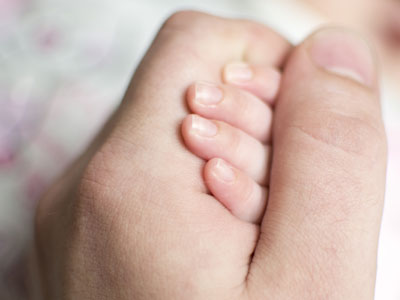
The best known pediatric retinal condition is retinopathy of prematurity. It develops when a baby is born prematurely and the blood vessels of the retina have not finished growing normally. Abnormal vessels can then form, leading to scar tissue and, without treatment, permanent and irreversible vision loss.
This can cause scar tissue and lead to permanent, irreversible vision loss.Early stages of retinopathy of prematurity are treated with anti-VEGF medications, which stop the abnormal vessel growth. Laser surgery is also used to eliminate unusual blood vessels and prevent further vision loss. More advanced cases occasionally require retinal and vitreous microsurgery in the operating room.
What Are Pediatric Retinal Conditions?
Pediatric retinal conditions fall into two broad groups, and knowing which type a child has helps families understand what to expect over time.
Stationary conditions are present at birth, and the associated vision loss stays consistent as the child grows. Vision does not deteriorate further, and children often adapt remarkably well.
Progressive conditions are not apparent at birth. Vision is typically normal early on and decreases gradually over months or years, which is why children with a family history of retinal disease benefit from regular monitoring even when they seem to be seeing well.
What Signs Should Parents Watch For?
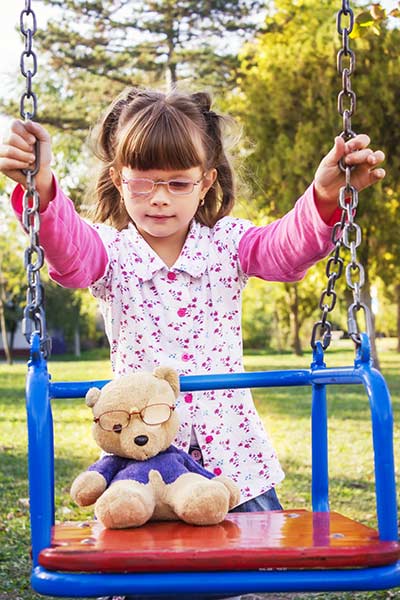
Children rarely report vision problems, because a child who has always seen a certain way has no reason to think anything is wrong. Parents and teachers usually notice behavior before a child says anything.
Signs worth having evaluated include:
• Difficulty reading even with prescription glasses or contact lenses.
• Consistently turning or tilting the head to one side in order to see or read.
• Poor vision at night or difficulty adjusting in dim light.
• Sudden or unexplained loss of vision, whether in peripheral vision or a particular part of the visual field.
• Nystagmus, a rapid, involuntary back and forth motion of the eyes.
• Photophobia, an unusual sensitivity to or intolerance of light.
• Sitting very close to screens or holding books unusually near the face.
• A white or unusual reflection in the pupil, sometimes first noticed in flash photographs.
That last sign deserves particular attention. A white pupil appearing in photos, known medically as leukocoria, should always be evaluated promptly, because it can be the first indication of retinoblastoma or another condition inside the eye.
What Other Retinal Conditions Do You Treat in Children?
Our physicians diagnose and treat a broad range of retinal conditions in children, including:
• Detached retinas. Retinal detachment in children is less common than in adults and often follows trauma or occurs alongside another eye condition. It requires prompt surgical repair.
• Ocular infections. Most eye infections in children are benign, but some carry serious visual consequences. Children usually present with eye discharge, visual symptoms, or a red or painful eye, and prompt evaluation determines which category an infection falls into.
• Intraocular tumors, including retinoblastoma. Retinoblastoma is a cancer of the retina that occurs in young children, and our doctors are equipped to identify and diagnose it. Early detection matters enormously for both vision and overall health.
What Hereditary Retinal Disorders Affect Children?
Several inherited conditions affect the retina in childhood. Each behaves differently, and an accurate diagnosis guides what families can expect and what support will help.
Coloboma is an eye abnormality that forms before birth, in which pieces of tissue are missing from structures that make up the eye. Its effect on vision depends on which structures are involved and how much tissue is absent.
Retinitis pigmentosa (RP) is an inherited, degenerative disease in which the rod photoreceptor cells of the retina break down progressively, causing severe vision impairment. Night vision and peripheral vision are usually affected first.
Stargardt disease, also called fundus flavimaculatus, is an inherited form of juvenile macular degeneration. It causes progressive loss of central vision, often advancing to the point of legal blindness while peripheral vision remains.
Optic nerve hypoplasia (ONH) arises from underdevelopment of one or both optic nerves and is the most common congenital optic nerve anomaly. The optic disc appears abnormally small because not all of the optic nerve fibers developed properly.
Frequently Asked Questions About Pediatric Retina
When Should My Child See a Pediatric Retina Specialist?
Your child should be evaluated by a retina specialist if your pediatrician or eye doctor refers you, if your child was born prematurely and requires retinopathy of prematurity screening, if there is a family history of inherited retinal disease, or if you notice any of the warning signs described above. A white pupil in a photograph, sudden vision loss, or a red and painful eye should be evaluated right away rather than at a routine appointment.
Why Do Premature Babies Need Eye Exams?
Retinopathy of prematurity develops silently in the weeks after birth, at a stage when a baby obviously cannot report any symptom and the eye looks normal from the outside. Screening exams allow a specialist to see the developing retinal vessels directly and to catch abnormal growth at the point when treatment works best. Babies born earliest and at the lowest birth weights are at highest risk, and your neonatal team will advise on the screening schedule your baby needs.
What Happens During a Child's Retina Exam?
Your child's pupils are dilated with drops so the specialist can examine the retina thoroughly. For infants and young children, a small instrument may be used to keep the eye open gently, and the exam is done with a bright light and a handheld lens. Exams are brief but can be unsettling for a young child, so parents are encouraged to stay close and bring a favorite comfort item. Expect your child's vision to be blurry and light sensitive for several hours afterward.
Are Pediatric Retinal Diseases Inherited?
Some are and some are not. Retinitis pigmentosa, Stargardt disease, and many colobomas have a genetic basis and can run in families, while retinopathy of prematurity results from premature birth rather than inheritance. When an inherited condition is suspected, genetic counseling and testing can clarify the pattern in your family and help guide monitoring for siblings.
Can My Child's Vision Be Saved?
It depends greatly on the condition, and honest answers vary. Retinopathy of prematurity, retinal detachment, and many infections respond well to timely treatment, and outcomes can be excellent when care begins early. Progressive inherited conditions such as retinitis pigmentosa and Stargardt disease cannot currently be cured, though research is active and low vision support can help a child use their remaining vision effectively. Your child's retina specialist can explain what is realistic in your specific situation.
How Do Children Adapt to Vision Loss?
Often better than parents expect. Children are adaptable, and those with stationary conditions in particular tend to develop strategies naturally because they have never known anything different. Early diagnosis matters here too, since a child whose vision limitations are understood can be supported at school, positioned properly in the classroom, and connected with vision resources and low vision tools designed for young learners.
If your child has been referred for retinal evaluation, was born prematurely, or is showing any of the signs described here, please contact Florida Retina Institute or call our office to speak with a member of our team. With 21 locations throughout Florida and Georgia, expert pediatric retina care is always close to home.



Florida
Clermont
Daytona Beach
Fernandina Beach
Fleming Island
Kissimmee
Jacksonville Riverside
Jacksonville Southside
Lady Lake
Lake City
Lake Mary
Mount Dora
Orange City
Orlando 95 Columbia St
Orlando 115 Columbia St
Palatka
Palm Coast
St. Augustine
Titusville
Wildwood
Georgia
Mondays - Fridays: 8AM to 5PM
Saturdays - Sundays: Closed
In Case of Emergency: 911
contact@floridaretinainstitute.com